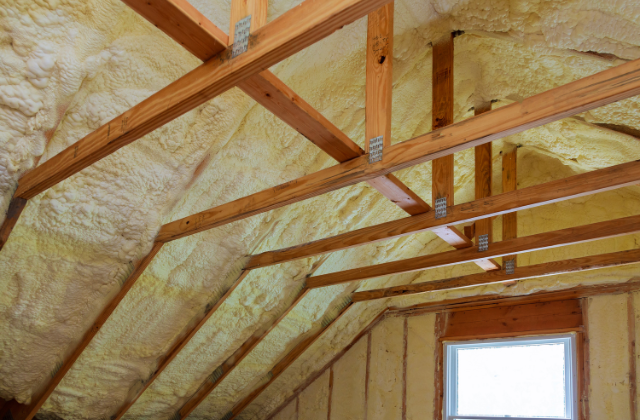
Attic insulation can help keep your home cooler in summer by slowing the heat that moves from a sun-baked roof into the rooms below. It works best alongside air sealing and ventilation, and Davidoff Roofing’s attic insulation services in London, Ontario, can show you how your attic measures up.
How Does Attic Insulation Cool Your Home?
It slows heat flow. On a sunny day, your roof heats the attic, and insulation across the attic floor slows that heat from moving down toward your ceiling. A thin or uneven layer lets more of that heat through. The same layer that holds heat in during an Ontario winter helps hold it out in summer. It does not make the air colder, but it can ease the load on your fans and air conditioner.
Is Insulation Alone Enough?
No. Three parts work together:
- Insulation: enough depth, spread evenly across the attic floor.
- Air sealing: gaps around light fixtures, the attic hatch, and pipes let heat and humid air bypass the insulation.
- Ventilation: intake at the soffits and exhaust near the peak let hot air leave the attic.
Insulation added over unsealed gaps, or pushed against blocked vents, does less than it should. Our guide to roof ventilation covers how attic airflow works.
Which Signs Point to an Attic Problem?
You do not need to step into the attic. A look from the hatch, plus how your upstairs feels, tells you a lot.
| What you notice | What it may mean | What to do next |
| Upstairs rooms stay hot after sunset | Thin, uneven, or leaky attic insulation | Ask for an attic assessment. |
| You can see the ceiling joists from the hatch | Insulation may be thin | Have the depth measured against what suits your home. |
| Insulation is pushed back from the eaves, or soffit vents are covered | Blocked airflow | Ask about baffles that keep the vents clear. |
| Damp, matted, or stained insulation | A past leak or condensation | Have the roof checked first with a roof inspection. Wet insulation that cannot dry may need replacing. |
| Loose-fill insulation in a home built before 1990 | Possible vermiculite, which may contain asbestos | Do not disturb it. Tell your contractor before any work starts. |
To learn when old insulation has reached the end of its life, read our post on when attic insulation needs replacing.
Should You Add an Attic Fan?
Not as a first step. If the attic floor has gaps or the soffit vents are blocked, a fan can pull cooled air out of your living space and into the attic. Seal and ventilate first, then ask whether a fan makes sense for your home.
What Should a Professional Visit Cover?
A good visit measures insulation depth and coverage, checks that soffit vents are clear, looks for moisture or damage, and notes air leaks to seal. Damp or pest-damaged insulation usually needs to come out first, while sound insulation can sometimes be topped up. The right material and thickness depend on your attic, and building standards have tightened over the years, so an older home may fall short of today’s. Cost varies with attic size and condition, so ask for a written estimate. Ask what was found, and request photos of the attic before and after any work.
Book an Attic Insulation Assessment
Insulation also works in winter, so an upgrade planned now can help in both seasons. Every attic is different, and an inspection is the way to confirm what yours needs. Contact Davidoff Roofing today at 519-641-7663 or book an estimate to talk about attic insulation for your London, Ontario home. Our contractors are certified, we are happy to provide proof of insurance, and we offer flexible financing options.